Human | Nature
A Living Framework for the Modern World

Fundamental truths about who we are as part of nature, and a blueprint for building systems to heal ourselves, our communities and the planet.
We do not "come into" this world; we come out of it, as leaves from a tree. As the ocean "waves,"the universe "peoples." Every individual is an expression of the whole realm of nature, a unique action of the total universe.
A Shared Truth
In America in 2025, three decades after the Internet became a thing, two decades after Nine Eleven, one decade after the FIRST Trump administration, a media landscape dominated by capitalist legacy media and rage-baiting social media algorithms have created a world where we’re not just getting different (even false, potentially dangerous) information, we’re living in separate realities.
But there must be some universal truths. These tenets form the foundation of the Human | Nature framework. Each idea will be explored in depth, but these are our starting point:
I. We are part of a vast, interconnected universe.
We live on Earth, a planet orbiting an ordinary star within the Milky Way galaxy, inside an ever-expanding Universe. We are not separate from it; we are of it.
II. We are made of the same elemental matter as the stars.
Atomically, the fundamentals of life are the same everywhere. "We are starstuff" — a phrase both poetic and scientifically accurate. The material of the cosmos flows through us.
III. Humans are animals.
At our core, humans are mammals driven by ancient, observable behaviors shared across species: Fear, Caring, Seeking, Sadness, Lust, Anger, and Play. These instincts are not learned; they are survival mechanisms.
IV. All living systems are interconnected.
From the microscopic cells within our bodies to the ecological networks across the planet, no system exists in isolation. Interdependence is the fabric of reality.
V. Reality is not binary.
Modern narratives often reduce the world to "either/or" thinking. In truth, everything exists along a spectrum — identity, behavior, thought, emotions, life itself.
VI. Truth includes paradox.
Two seemingly opposite ideas can both be true at once. Nature itself thrives in the tension between chaos and order, growth and decay, change and constancy.
VII. Human systems are bound by nature’s laws.
All living things operate within ecological limits—cycles of balance, reciprocity, interconnectedness and regeneration. When our systems ignore these laws in pursuit of infinite growth or unchecked extraction, they destabilize both society and the earth that sustains it.
VIII. Ancient knowledge remains relevant.
Storytelling, meditation, and Indigenous teachings offer pathways back to truths that modern society has often buried. Ancient knowledge is not primitive; it is primal, highly sophisticated, and being validated by science more and more.
IX. Human strength emerges through connection.
True power does not come from “rugged individualism” but from relationship — with ourselves, with others, and with the living world around us. When we’re disconnected from our own humanity, we cannot fully love others. Healing begins inside, then moves outward.
X. Nature imparts lessons for society.
Just as biodiversity strengthens ecosystems, human diversity strengthens communities. Curiosity fuels growth. Reverence for the Earth reminds us we belong to something greater than ourselves.
Where We Are
Before I explain where we can go, I want to be clear about where we are: I am disturbed by the current state of the world. The polarization, massive income inequality, rapidly changing climate, wars, genocide, racism and the rise of authoritarianism (once again) are just a few of the massive systemic problems our modern society is facing.
At the same time, we live on a planet that has sustained life for billions of years. Every time something threatened its survival, life didn’t collapse — it adapted.
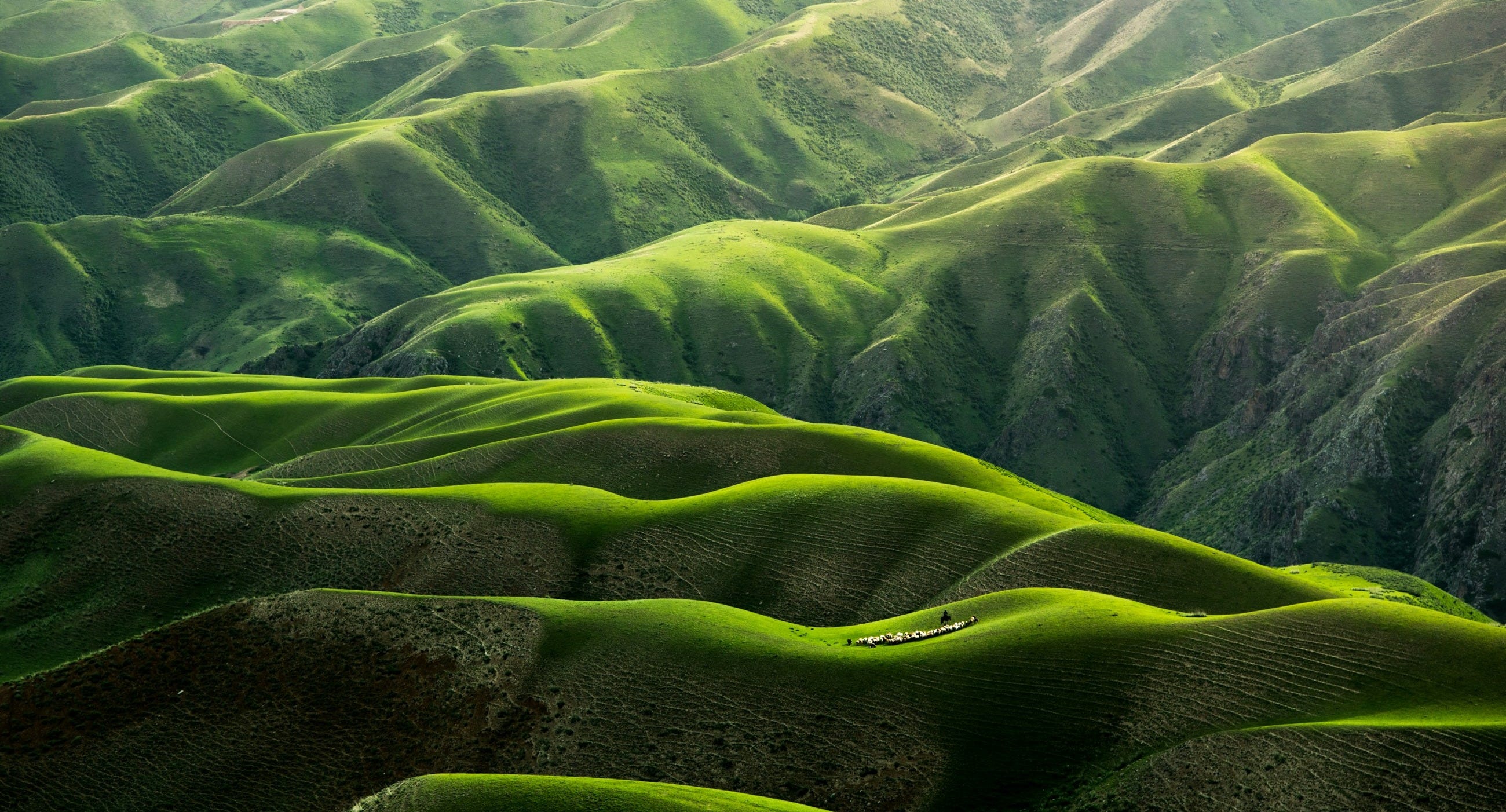
I believe that people are all fundamentally the same. I have since childhood; it was just a “truth” that I knew. But I never really delved any deeper than “people are all the same.” What did it mean—especially when acknowledging that everyone’s lived experience is unique? Funny enough, observing my dog and animals in the park helped me realize it wasn’t just people with whom we share our fundamental sameness, but all mammals (and potentially other animal families).
At a base level, we were all created by Nature. We live in a society but we are still primal animals. We have primal needs and desires. Emotions are part of our primal selves. Sex is part of our primal selves. Instincts. These are things we share in common with the animals. Along with yawning and farting.
Dr. Jaak Panksepp, a neuroscientist and one of the founders of the field of affective neuroscience, identified core emotional systems in the brains of mammals—emotions that are evolutionarily ancient, biologically hardwired, and shared across species. These aren’t learned behaviors or social constructs—they’re primal emotional drives that have helped animals (including humans) survive.
These emotional systems — SEEKING, FEAR, CARE, ANGER, PLAY, and SADNESS — are part of the architecture of being alive. They’re not just survival tools. They’re meaning-making systems. They’re how we relate to each other, and to the world.
Overlapping Systems
I’ve started to think about the world as two overlapping systems:
1. The Natural World – the planet itself and all its varied and diverse ecosystems. Primal life (including ourselves) and the mysteries beyond our atmosphere.
2. The Unnatural World – systems created by humanity like national borders, politics, media, laws and culture.
In the Unnatural World, Capitalism reigns, but capitalism cannot sustain us on its own. We need better metrics of success than quarterly profit earnings and shareholder dividends. The Natural World operates in cycles: give and take, growth and rest. But capitalism worships a single direction — up — which is at odds with those natural laws. We’re living in a time where a handful of ultra-wealthy men are hellbent on building a society that’s completely at odds with the very framework on which it rests: Planet Earth.
I’m firmly Generation X — skeptical, self-reliant, not one to overshare. I don’t make a fuss. In fact, I think more people need to learn to calm the fuck down and stop offering opinions on things they know nothing about. But in this hyper-connected age, everyone has the chance to be seen. Very few use it to actually see. I didn’t set out to write about spirituality. I like facts. I like structure. But if I’m writing about the planet, or society, or culture, I can’t avoid it — because everything is connected. That’s not just a belief system. That’s the reality of the natural world. That’s the nature of nature and we need to remember it back into society.
I don’t believe in God, at least not in the sense of most current organized religions. I grew up Catholic and went to 12 years of Catholic school, but churches are something built by man. They are firmly a part of the Unnatural World. But I do believe in science, in things I can observe. I believe in the Planet Earth and the universe beyond our atmosphere. I acknowledge its mysteries. On an atomic level, we are all made of the same elements as the rest of the universe. Planet Earth has nurtured life in several forms for billions of years. All living things are part of the framework the Earth has built. I find that sacred, so if one wanted to call it “god,” I wouldn’t argue.
However, the “god” of the Natural World seems to be at odds with the gods of the Unnatural World. The ones man has created and refined over the millennia. Where the gods of our modern religions may say that being gay or trans is wrong and unnatural, Planet Earth says that gender and sexuality spectrums exist in all species and are part of the diversity that makes this planet work.
Imagining Something New
The Human/Nature Framework will become a map for reconnecting with ourselves and others based on the lessons taught to us by nature. Aligning our unnatural systems with our natural ones through self-exploration, community outreach and advocacy.
It will integrate guidelines for realigning:
1. The Self
2. The Tribe—aka your community
3. Society at large
To begin to evolve from our current times, we need people to build empathy; acknowledge the complexities of everything (people, systems, etc.) in ways our current media and social network ecosystems don’t allow; foster curiosity in young people (and everyone else), and reconnect with our primal selves.
Perfection should never be something we aspire to, because it doesn’t exist in nature. In nature, survival and flourishing come from adaptability, diversity, and relationship—not rigid ideals of flawlessness.
While acknowledging that no existing system of government is perfect, the system that most closely aligns with our Human | Nature framework is Democratic Socialism. Democratic socialism’s emphasis on community well-being, social safety nets, and equitable resource distribution aligns nicely with the ideal of an ecosystem-like society.
For too long, our leaders have worked within a neoliberal framework, worshiping the Market as the ruler of all things. Deregulation and “supply side economics,” crafted in the Chicago School and mainstreamed by Reagan nearly 50 years ago have left us with rising inequality and dismantled collective responsibility. Our billionaire ruling class still clings to these ideas because it cloaks greed in the language of morality and inevitability.
The Human | Nature framework is about building a different story—one rooted in reciprocity, interdependence, and the laws of life itself. Over the coming years I’ll continue to develop this philosophy, exploring everything from identity and self-help, public policy, popular culture, our relationship with technology, and so much more. After all, this is a philosophy about everything, because everything is connected.